
The Bottleneck Moved From the Weld Head to the Test Rack
For a decade, PACK-line capacity was measured by how fast a robot could stack cells and how fast a laser could weld a busbar. That is no longer where lines stall; they stall at the quality gate: cell grading before assembly, aging before shipment, and end-of-line verification at the finish. On 2 September 2026 a new Chinese group standard widened that gate considerably — and turned test capacity into a capital-planning question.
What T/CPQS A0065—2026 Actually Changed
T/CPQS A0065—2026, Safety Requirements and Test Methods for Electric Vehicle Traction Battery System During Service Life, was jointly led by the China Consumer Product Quality Safety Promotion Association and the China Automotive Engineering Research Institute (CAERI), with more than twenty co-developers including Huawei Terminal, CATL, BYD, Gotion High-tech, EVE Energy, Xiaomi Auto and SGMW, plus the SAMR Defective Product Recall Technical Center (China Economic Net, 18 September 2026).
The design is two-stage. Initial-state safety covers 13 tests across mechanical, thermal, insulation and electrical safety, adding chassis abuse cases such as bottom impact, ground scraping and connector crush. Post-durability safety is the new part: samples are aged through mechanical, environmental and cycle durability, then re-tested for over-temperature, over-current, over-charge, over-discharge and immersion.
The quantified judgments matter for equipment design: insulation resistance not below 100 Ω/V after test, airtightness leakage under 100 Pa/min, and no more than two failed cells besides the trigger cell.
CAERI positions the standard as raising the industry’s high-water mark above GB 38031—2025, which became mandatory on 1 July 2026. CAERI chief expert Yao Zhenhui noted that by August 2026 the institute had accumulated over a million real test data records, and that the method grew from that data rather than being drafted on paper (CCTV, September 2026).
Why This Lands on Grading and Aging Equipment
Read the test sequence backwards and it becomes a production-equipment problem. Three durability pre-treatments mean one sample now occupies benches for weeks rather than hours. Vibration tables, environmental chambers and charge-discharge channels must be strung into one reproducible time axis, which rewrites scheduling logic and equipment-utilisation assumptions. No amount of welding speed compensates. You buy channels, racks, energy recovery and data continuity instead.
Data continuity is not optional: the standard demands before-and-after curves, not a pass/fail verdict. Aged cells must be cross-referenced against the voltage, resistance and capacity recorded when they were graded, so the grading machine at the head of the line and the EOL tester at the finish must write into one traceable dataset.
| Stage | Position in the line | What it screens | Equipment role |
|---|---|---|---|
| Cell grading | After formation | Capacity, OCV, internal resistance | Multi-channel cycler plus sorting |
| Module pre-weld check | After stacking, before busbar welding | Insulation withstand, contact resistance | Inline hipot and milliohm scan |
| Aging / burn-in | Before shipment | Self-discharge drift, capacity retention | Temperature-controlled aging racks |
| PACK / module EOL | End of assembly | Function, BMS communication, seal integrity | EOL comprehensive test system |
| Durability re-verification | Off-line test laboratory | Post-vibration, post-cycle safety | Environmental and cycle benches |
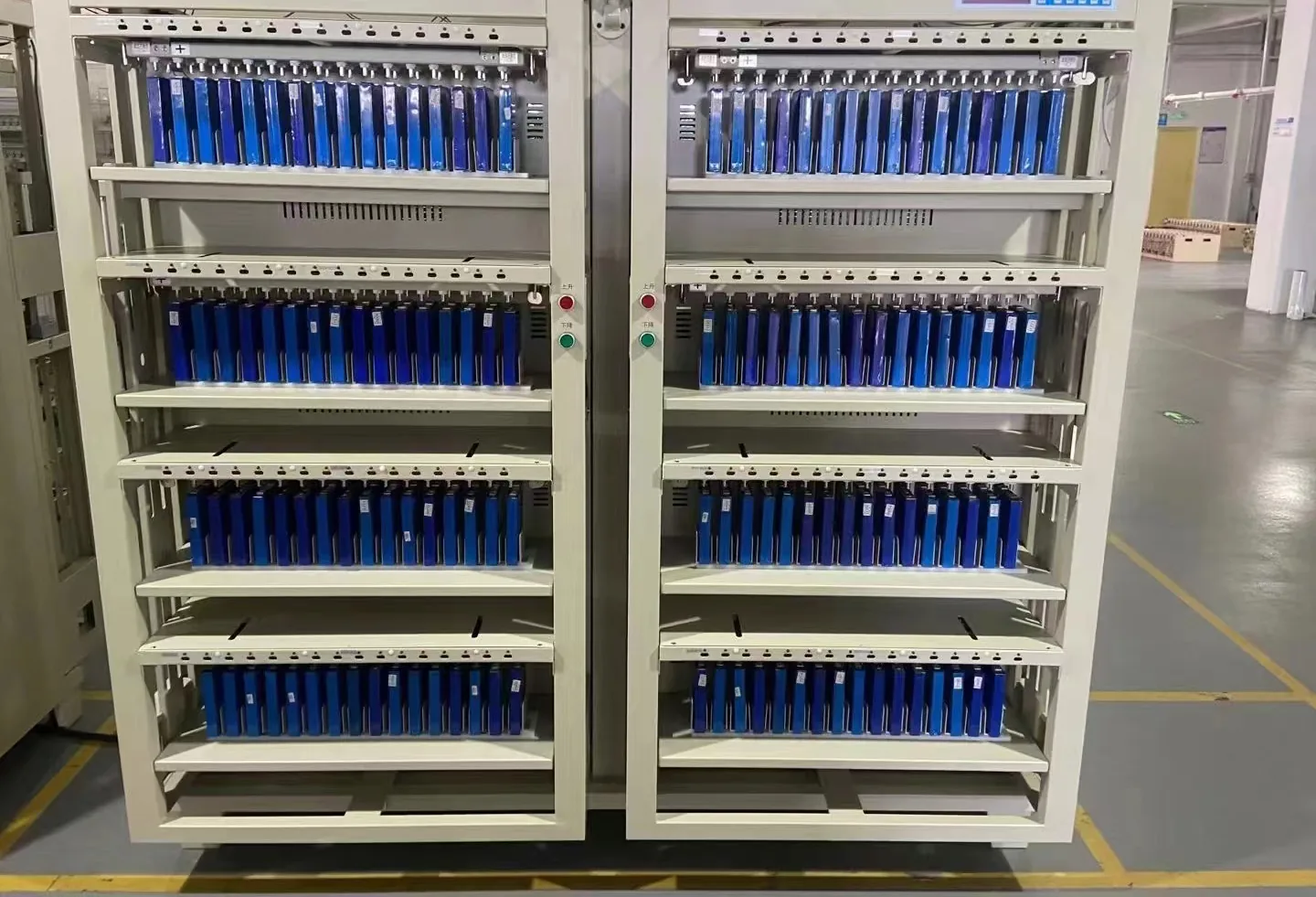
The Market Is Already Repricing Test Equipment
The numbers agree. QYResearch puts global cell-sorting-machine sales at USD 882 million in 2025, rising to USD 2.586 billion by 2032, a 16.5% CAGR on an average unit price near USD 36,000 (QYResearch, September 2026). The formation and capacity-grading equipment market is projected to grow from USD 450 million in 2025 to USD 1.0 billion by 2033, with prismatic systems taking about 42% of 2025 revenue and Asia-Pacific over 60% (Archive Market Research, 2026).
Industry research adds the qualitative shift: for energy-storage cells, grading has moved from a two-parameter resistance-and-capacity screen to a six-dimension evaluation including self-discharge trend slope and high-temperature stand voltage drop. That alone pushed ESS-specific sorting equipment prices up roughly 18% (Chanye Shijie / 产业世界, 4 September 2026).
| Metric | Figure | Source |
|---|---|---|
| Cell sorting machine sales, 2025 | USD 882 million | QYResearch, Sep 2026 |
| Cell sorting machine sales, 2032 (forecast) | USD 2.586 billion | QYResearch, Sep 2026 |
| Forecast CAGR, 2026–2032 | 16.5% | QYResearch, Sep 2026 |
| Formation and grading equipment market, 2025 to 2033 | USD 450 million to USD 1.0 billion | Archive Market Research, 2026 |
| Forecast CAGR, 2026–2033 | 10.5% | Archive Market Research, 2026 |
| ESS sorting equipment price change | +18% | Chanye Shijie, Sep 2026 |

Test Nodes Are Moving Upstream Inside the Line
A parallel change is happening inside the PACK line. In a Q3 2026 supplier market summary, PACK lines procured with inline pack-test capability reached 54.8%, up 19 percentage points year on year. The telling detail is where the node moved: insulation withstand and initial contact-resistance checks now run after module stacking and before busbar welding, so a defective module never reaches the weld head. That demands test stations matching line takt, probe life in hundreds of thousands of contacts, and fieldbus integration into MES.
The trade-show floor agrees. At WBE 2026, the 11th World Battery & Energy Storage Industry Expo in Guangzhou on 16–18 September 2026, testing exhibitors showed BMS protection-board testers, cell internal-resistance testers and capacity grading testers alongside the usual welding hardware.
Small-Format Packs Have the Same Problem
It is tempting to file all of this under EV engineering. Do not. Global household-storage battery shipments hit 61 GWh in the first half of 2026, up 206% year on year, with full-year volumes forecast above 135 GWh (SPIR data reported by Repower, September 2026). Those packs use small-format cells — 18650, 21700 and small prismatic LiFePO4 — and each still needs grading, aging and EOL verification. Cell cyclers now quote ±0.02% F.S. accuracy, while PACK-level systems reach ±0.05% F.S. at 95%+ regenerative efficiency (Huanghe News, 16 September 2026).
For LiFePO4 HS-series builders in solar street lighting, telecom backup and small ESS, the lesson is simple: size grading and aging for peak demand, not average demand.
What to Specify in Your Next Line
- Count channels, not cabinets. Grading capacity is set by simultaneous channels and temperature-controlled positions, not floor area.
- Ask for energy recovery. 93–95% regenerative efficiency changes the operating cost of aging capacity more than any mechanical upgrade.
- Put the first test node before the weld. Insulation and contact-resistance checks belong after module stacking, upstream of the busbar weld head.
NEGUP MACHINE builds the full sequence: cylindrical, prismatic and pouch assembly lines, battery assembly equipment including cell sorting and spot welding, and battery testing equipment covering the NG-013 cell grading machine, the NG-014 pack aging machine and PACK/module EOL comprehensive test systems. For energy-storage and small-format applications we size grading and aging capacity to your cell format and output — tell us your cell type, channel count and throughput.
WhatsApp +86 15307690902 | rain@negupgroup.com